18 October 2026 · 5 min read · by Léa
Amigurumi: what is it, and where does the word come from?
Amigurumi: what this Japanese word means, what distinguishes an amigurumi from a soft toy or a charm, and how to recognise it at first glance.
An amigurumi is a small figurine made from yarn, crocheted then stuffed: an animal, a fruit, a character, sometimes a shape that does not exist anywhere else. The word comes from Japanese, and it refers to both the piece and the way it is made. Here is what it means, and how to recognise an amigurumi when you come across one.
Amigurumi: what is it exactly?
An amigurumi is a small volume made from yarn, closed in on itself and filled with stuffing. It is worked in the round, and not flat: the shape is built row after row, by adding stitches to round it out and removing them to tighten it.
It can fit in the palm of your hand or be much larger. It can be placed on a shelf, given as a soft toy, or attached to a bag and a keyring.
What makes an amigurumi is not its use: it is the technique.
The same small crocheted and stuffed fruit remains an amigurumi, whether it is placed on a desk or hung from a handle.
Where does the word amigurumi come from?
The word is Japanese. It combines two ideas:
- ami, which refers to a piece made by looping a yarn, with a crochet or knitting;
- kurumi, which is heard in nuigurumi, the Japanese word for a sewn and stuffed toy.
An amigurumi is therefore a toy made from yarn rather than sewn fabric. The name says exactly what the object is.
The history of the practice is poorly documented, and I prefer not to give you a date that nobody can verify. What is certain is that the word has been adopted as is in other languages. In French, we say an amigurumi, and we most often write amigurumis in the plural.
Is an amigurumi crocheted or knitted?
The Japanese word covers both techniques. In fact, most amigurumis are crocheted.
Crochet lends itself well to this. We work one loop at a time, which makes it easy to work in the round and shape the form stitch by stitch. We can also pull the work tight enough that the padding is not visible through the yarn.
For me, the question does not arise: everything is crocheted, I do not knit.
How to recognise an amigurumi?
Some signs are unmistakable. - It is three-dimensional. It has an inside. A flat flower or a motif sewn onto a fabric is not one. - It is padded. This gives it its shape and rounded forms. - The stitches are tight. The padding is not visible between the loops of the yarn. - It is worked in the round. On closer inspection, we often follow the rounds that start from a central point and widen. - Details are added. A leaf, a stem, eyes: these are often small crocheted pieces made separately and then attached, or a few embroidered stitches with yarn.
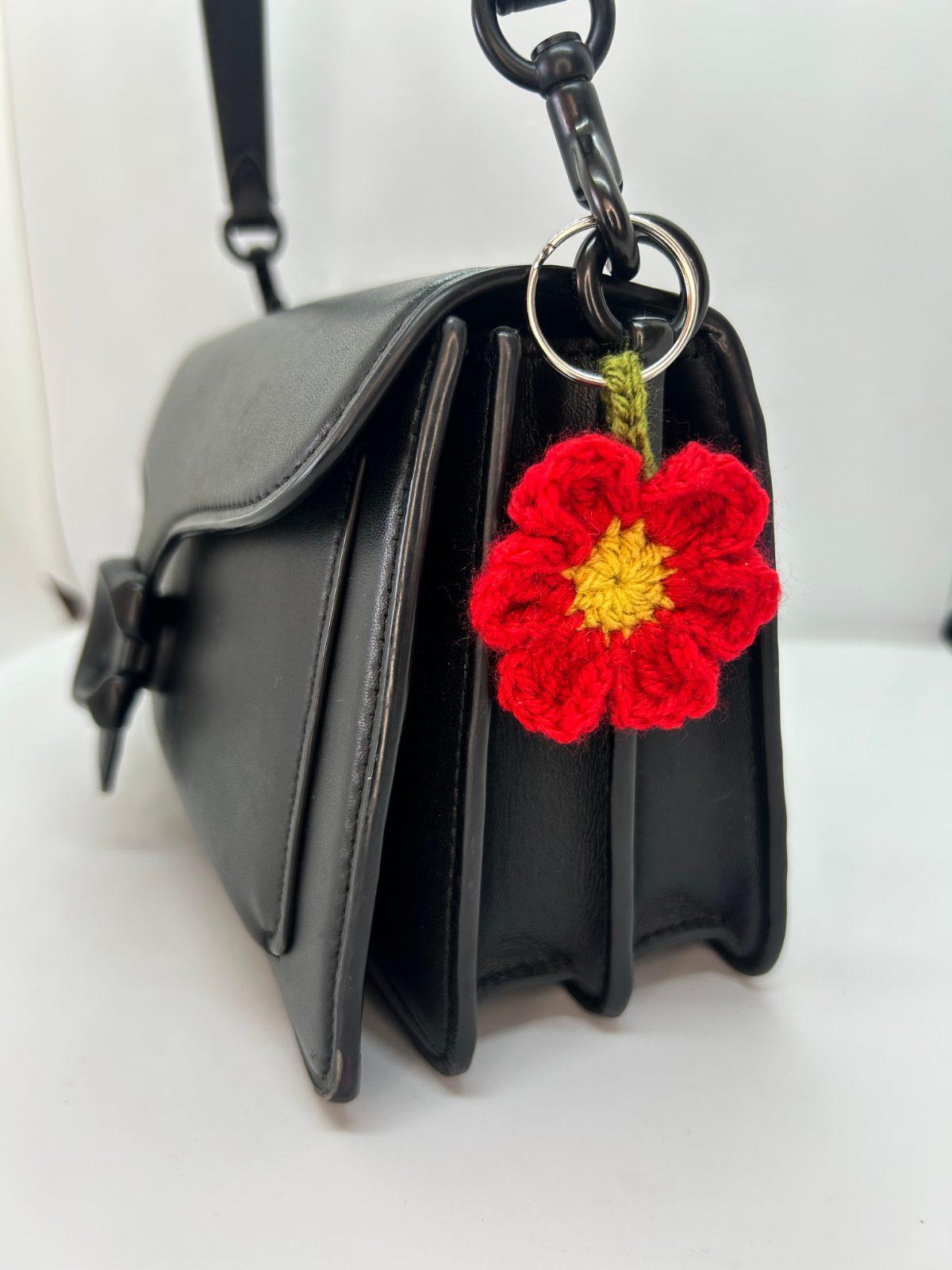
The FLORE keyring, for example, is not an amigurumi. It is a crocheted flower, without padding. A small round and filled fruit, on the other hand, is one.
Amigurumi, soft toy, charm: what is the difference?
The three words often overlap, and they do not refer to the same thing.
- The soft toy refers to a soft and padded object, most often made of sewn fabric. An amigurumi can serve as a soft toy, but it is made from yarn.
- The amigurumi refers to a technique: a crocheted shape in the round, then padded.
- The charm refers to a use: a small piece that is attached to a bag, keys, or the closure of a pouch.
A charm can therefore be an amigurumi, and many are. But a charm can also be a flat flower, a pearl or a metal breloque.
A part of what I crochet goes into this family: small, padded, handmade crochet pieces designed to be attached. They are all stored with the charms and trinkets.
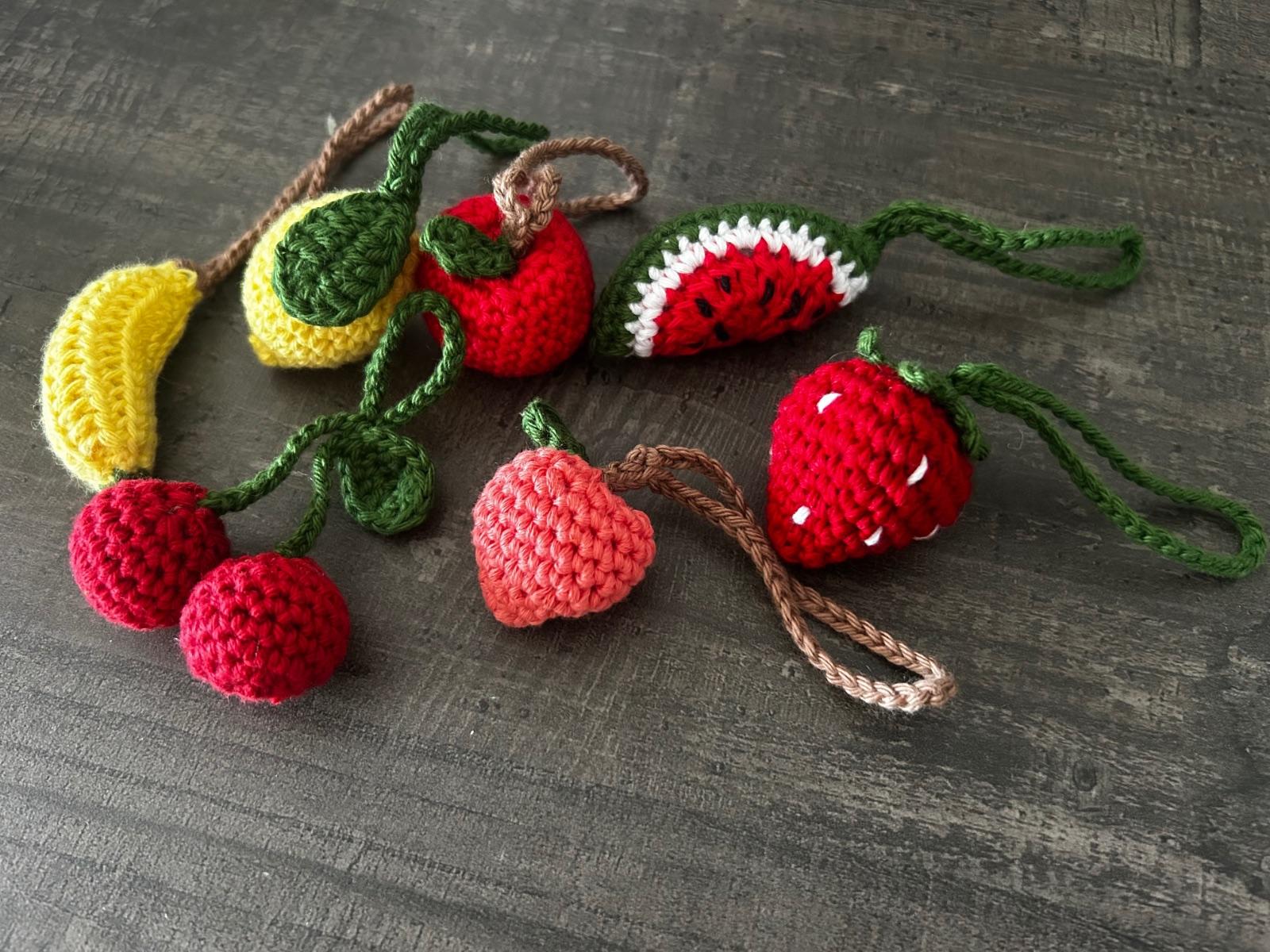
The fruit charms CLÉMENTINE form a mini series: Strawberry, Cherry, Banana, Lemon, watermelon, Apple, Peach. Seven fruits, made from 100% cotton yarn certified OEKO-TEX®, with polyester padding.
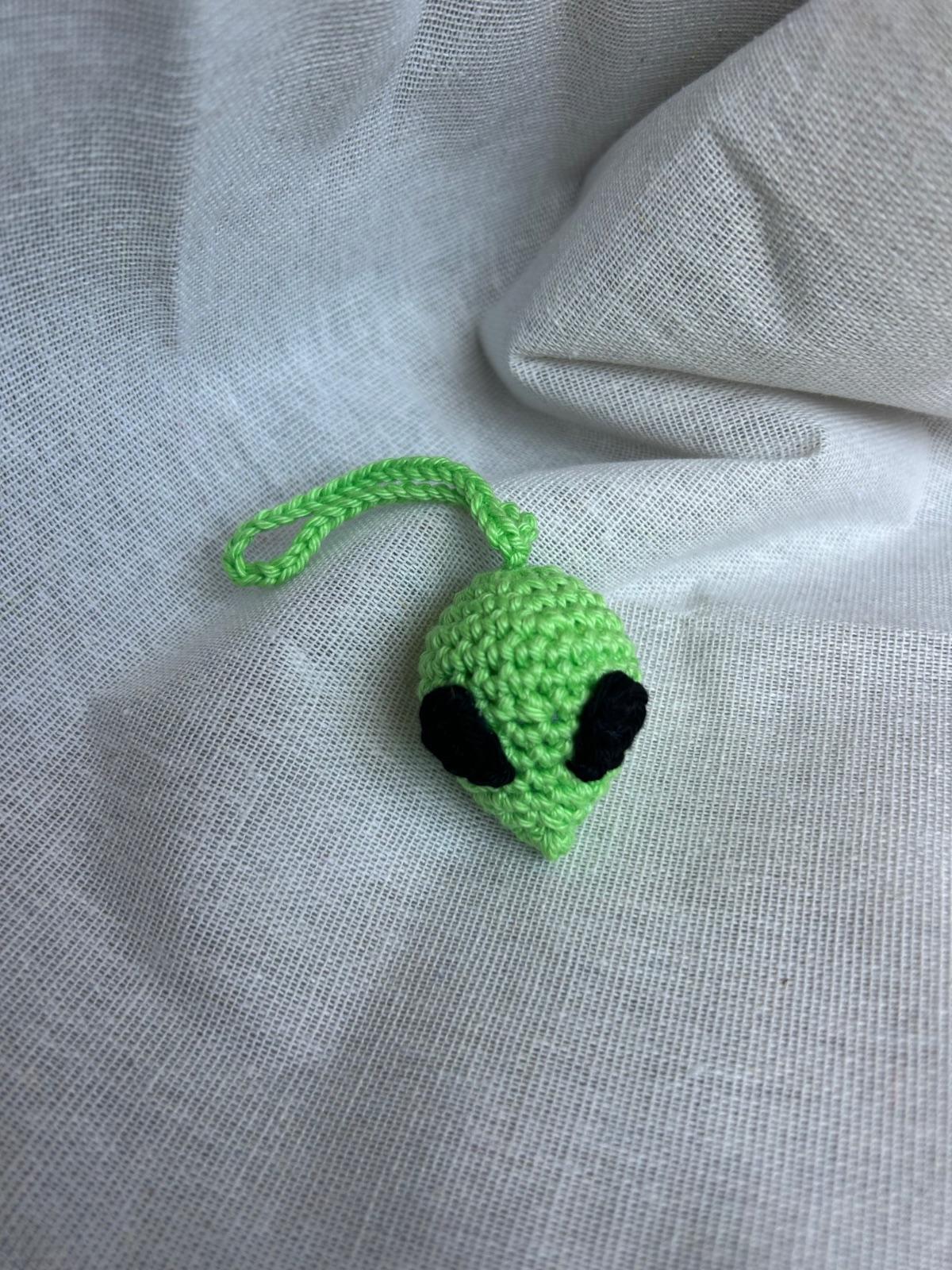
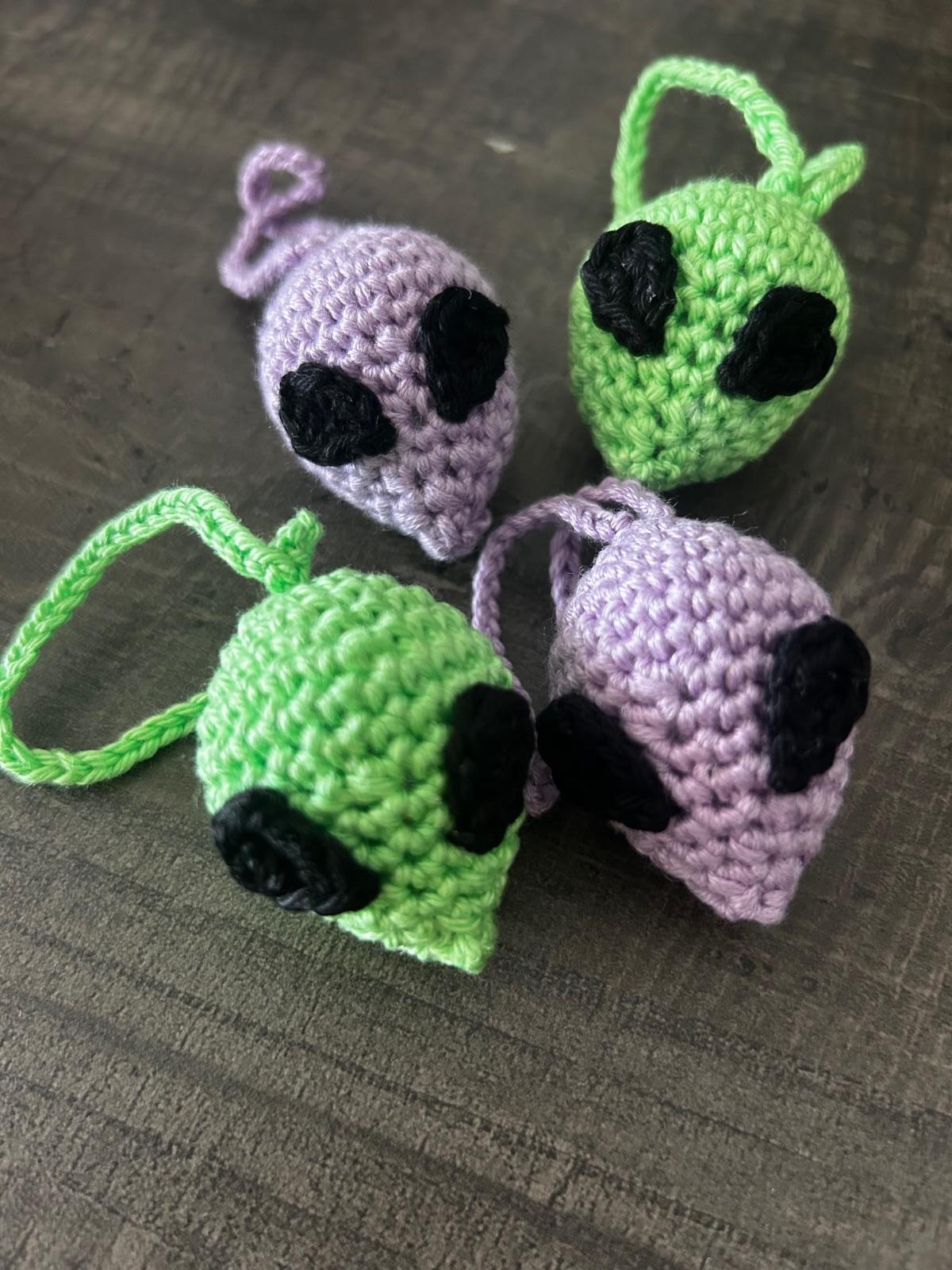
The small ufos NOVA were born at Christmas. I spent a lot of time looking for the right Green. I liked it too much to stop there, and it now exists in four colours. It is made from cotton yarn, padded with polyester.
The Autumn collection brings together the small symbols of the season: pumpkins, a Mushroom, a Ghost. These are charms made from 100% acrylic yarn certified OEKO-TEX®, padded with polyester fibres, with a clip and a ring made of steel.
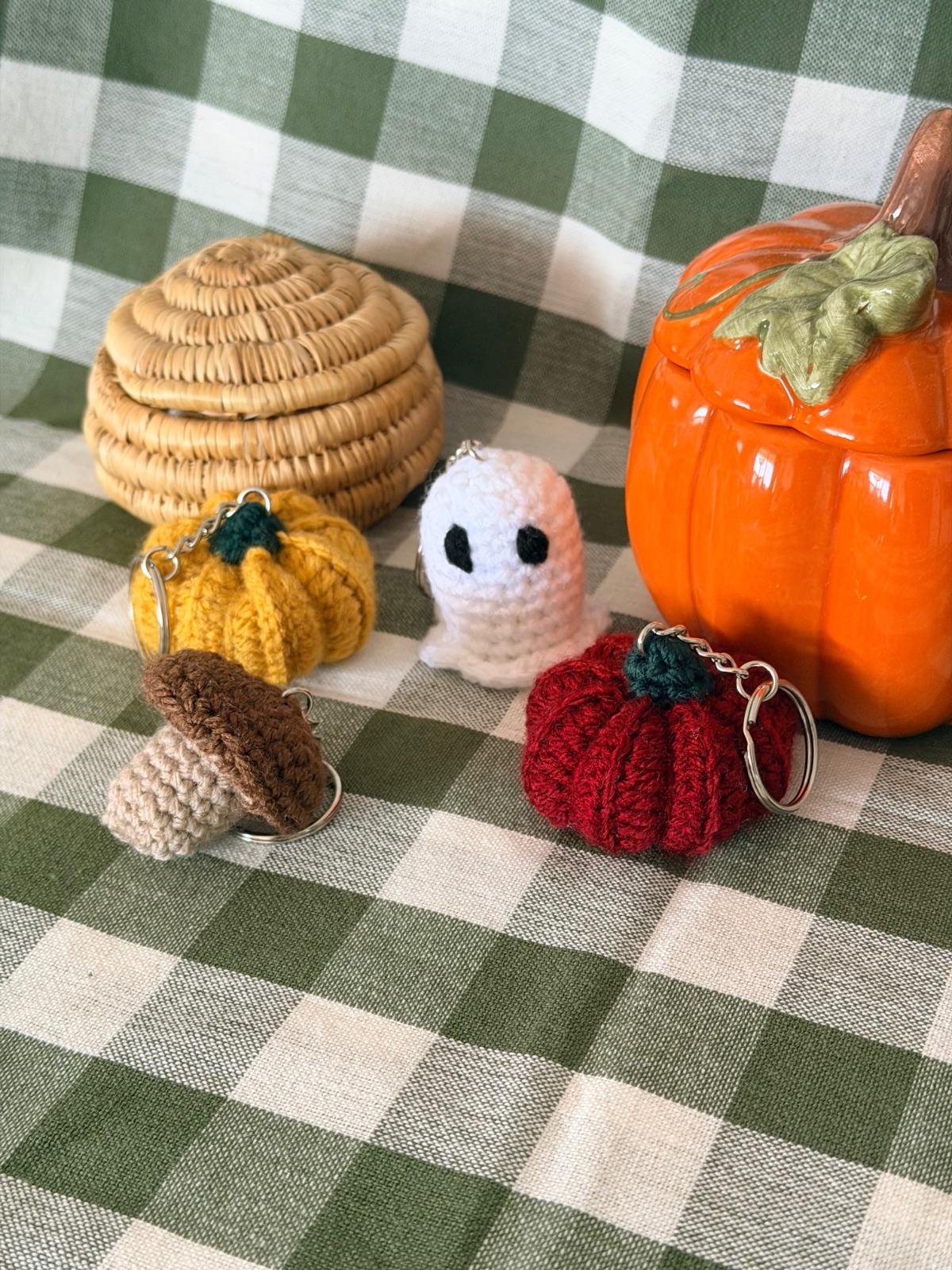
Each of these pieces is handmade, one by one. Slight differences from one piece to another are part of the handmade nature.
How to care for an amigurumi?
For mine, the instruction is the same on each card: they cannot be machine washed. Inside, there is padding and textile glue, and neither is suitable for a drum.
In case of a stain:
- gently dab with a barely damp cloth;
- let it air dry, flat and uncovered;
- no tumble dryer, no bleach.
For an amigurumi bought elsewhere, the safest option is to follow what its information page or label says, because yarns and fillings do not all behave in the same way.
Questions fréquentes
Comment écrit-on amigurumi au pluriel ?
En français, on écrit le plus souvent des amigurumis, avec un s.
Un amigurumi, est-ce forcément un animal ?
Non. Les animaux sont fréquents, mais un amigurumi peut être un fruit, un personnage ou un objet. Chez moi, ce sont des fruits, des ovnis et des citrouilles.
Un amigurumi est-il tricoté ou crocheté ?
Le mot japonais couvre les deux, mais la plupart sont crochetés. Chez Lunéa, tout est crocheté à la main.
Peut-on demander un amigurumi sur mesure ?
Vous pouvez me décrire votre idée depuis la page projet personnalisé, et on en parle ensemble.
All of Léa’s pieces are crocheted by hand, one by one, in the south of France. See the pieces