18 October 2026 · 4 min read · by Léa
Mercerised cotton: what is it, and what is the difference?
Mercerised cotton: what it is, where its name comes from, and what distinguishes it from a classic cotton in terms of appearance, feel and maintenance of a crochet piece.
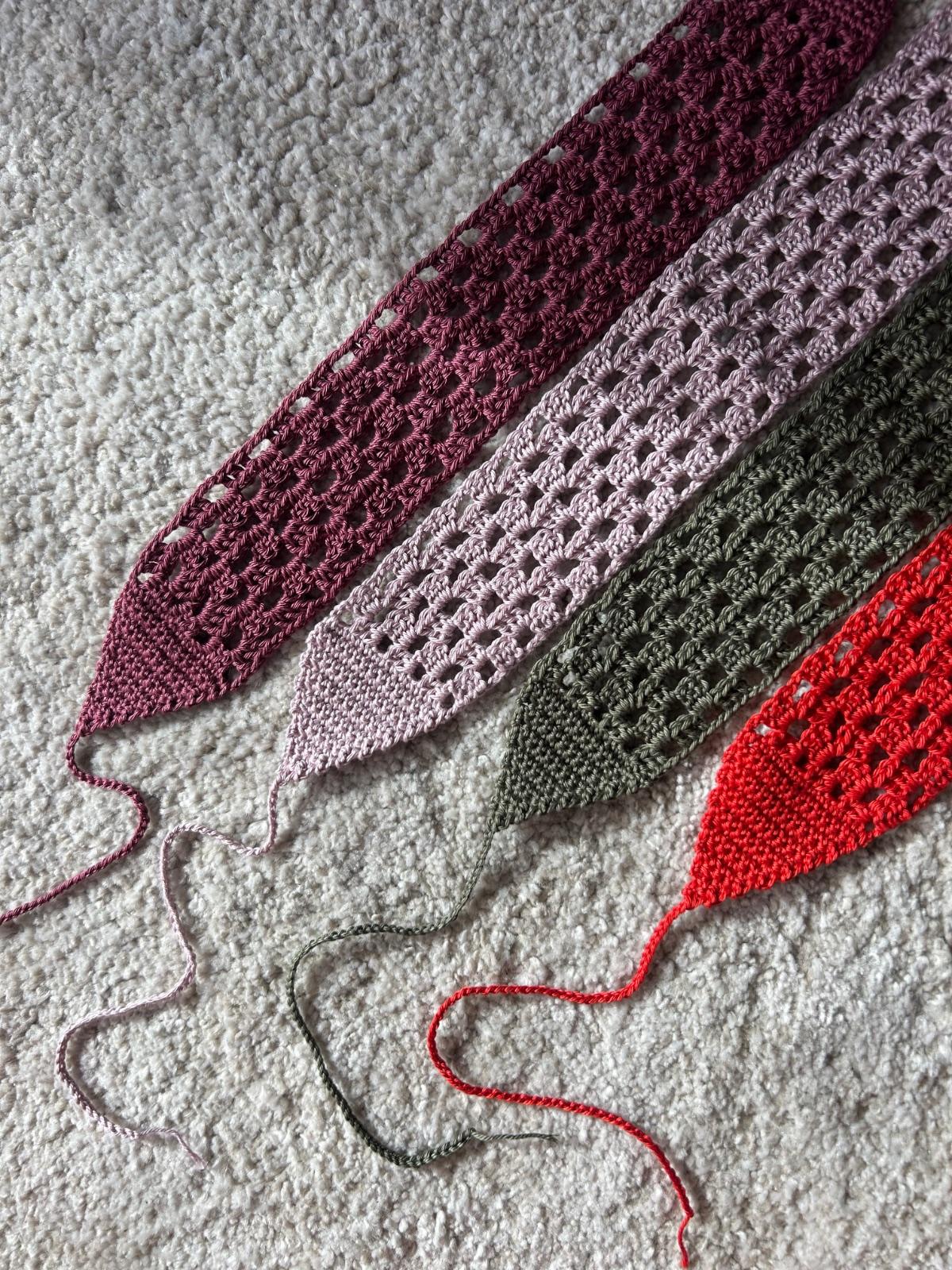
Mercerised cotton is a cotton that has received a treatment to become smoother, more solid and slightly shiny. It can be found on yarn labels, on some clothing, and in my shop on a headband, CLÉO. Here is what the word means, what really changes compared to classic cotton, and how to recognise it.
Mercerised cotton: what is it exactly?
Initially, mercerised cotton is ordinary cotton. What distinguishes it is a finishing stage called mercerisation.
The yarn passes through a caustic soda bath, while being held under tension. It is then rinsed and neutralised. Under the effect of this bath, the cotton fibres swell and become rounded: a raw fibre is rather flat and a bit twisted, a mercerised fibre becomes more rounded and regular.
This change in shape explains everything else. The light reflects better on a round fibre, hence the slight sheen. The surface is smoother. And the fibre takes the dye better.
The mercerised cotton remains cotton: it is its structure that changes, not its composition.
Where does the word "mercerised" come from?
The word comes from John Mercer, a 19th-century English chemist, who discovered the effect of soda on cotton. The process is named after him.
It has nothing to do with haberdashery, even if the two words are similar, and even if it is precisely in haberdashery that you can find this yarn.
What is the difference between cotton and mercerised cotton?
Both are cotton, but they do not behave in the same way. Here is what changes:
- The appearance : classic cotton is matte. Mercerised cotton has a slight sheen, discreet, that does not resemble that of a synthetic yarn.
- The feel : mercerised cotton is smoother, almost silky to the touch. Classic cotton is softer and more 'raw'.
- The colour : as the fibre takes dye better, colours appear deeper on mercerised cotton.
- The durability : the treated fibre is more resistant, and the yarn is less fluffy.
- The drape : a mercerised yarn hangs in a more fluid way.
Neither of the two is better in absolute terms. These are two different finishes, and the choice depends on what one wants to achieve: something matte and soft, or something smoother and more luminous.
How to recognise mercerised cotton?
On a ball, it is written on the label. On a piece already made, a few clues help:
- In the light : when tilting the piece, mercerised cotton reflects a slight sheen. Classic cotton remains matte at all angles.
- To the touch : mercerised cotton is smooth and cool, without the small fluff that can sometimes be felt on classic cotton.
- In the stitches : in a crochet piece, mercerised cotton stitches are more clearly defined, with well-defined contours.
The simplest way is to compare the two side by side. The difference is immediately visible.
Cotton or mercerised cotton for a crochet accessory?
At my place, the question arose with headbands. I first crocheted ALBA, my cotton headband. It is matte, soft, simple to wear every day.
After ALBA, I wanted to find exactly the same shape in a different material. This became CLÉO, the headband in mercerised cotton. In your hands, the difference is immediate: the yarn slides, it falls better, and the colour is deeper. Same headband, same comfort, just a bit more dressed up.

The two remain in the same family, with the scrunchies and clips, in the hair accessories.
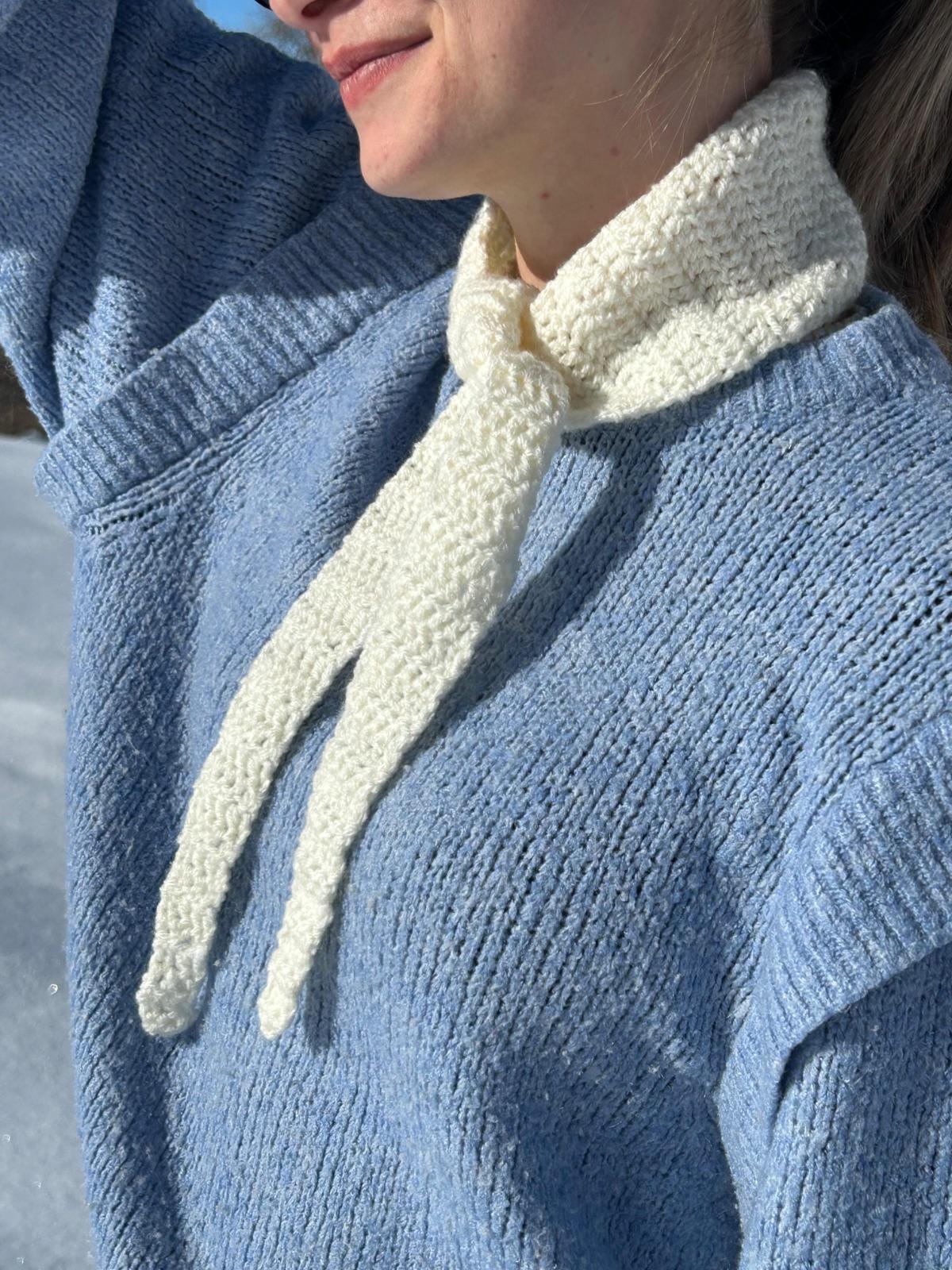
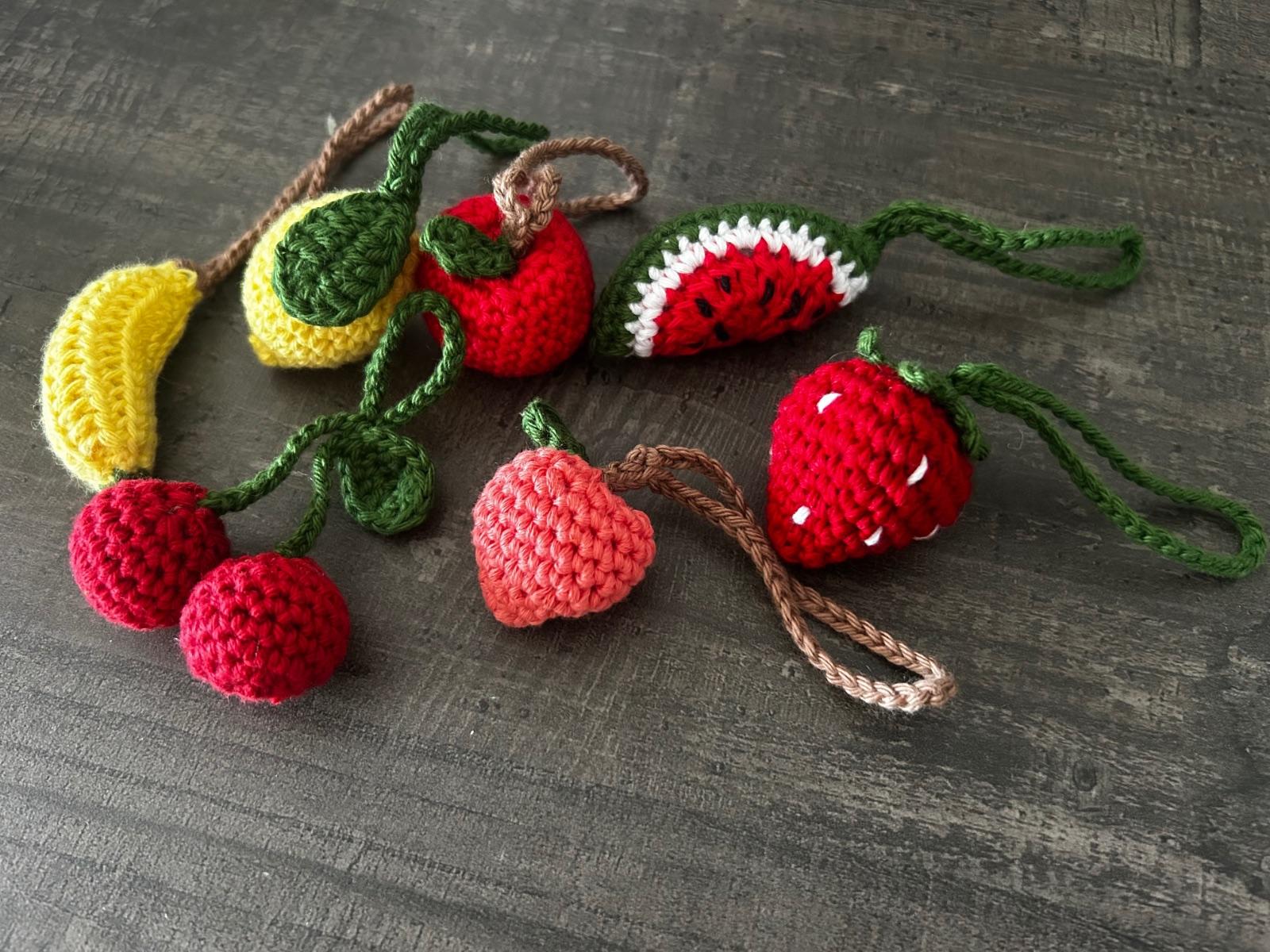
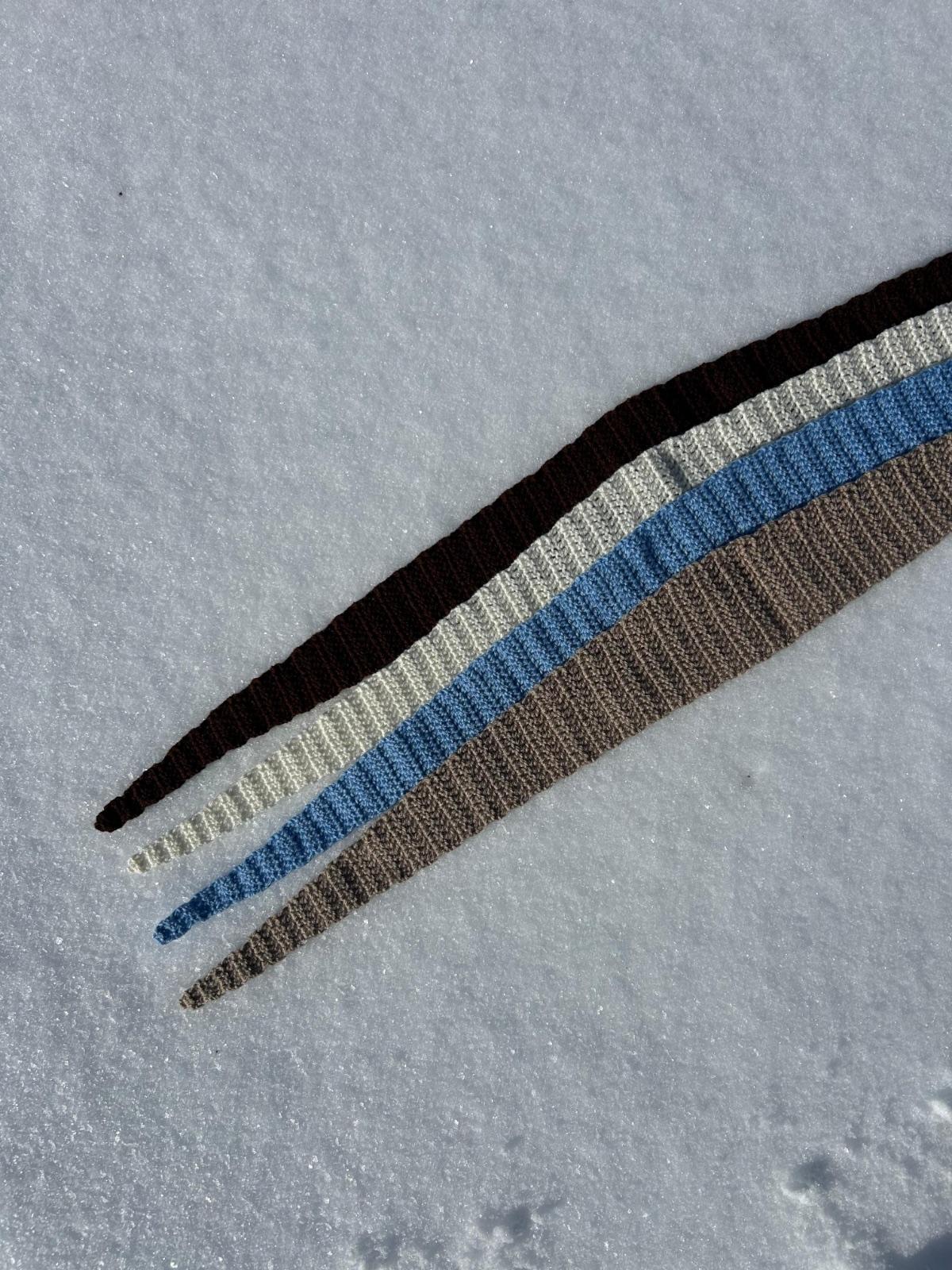
Cotton is not just for headbands. The CLÉMENTINE fruit charms are made from certified OEKO-TEX® cotton yarn, in the charms. Other pieces are made of acrylic, like the ÉLIA scarf: each material has its place according to what the piece needs to do.
How to care for mercerised cotton?
A handmade crochet accessory in mercerised cotton is washed like CLÉO :
- Hand washing, at a maximum of 30 °C.
- Do not rub or wring: gently press the piece in a towel.
- Drying flat, in the open air, reshaping the piece by hand.
- No tumble dryer, no bleach, no whitening product: they dull the shine of the mercerised cotton.
This is the same care as for a classic cotton headband. The only thing to watch out for in addition is this shine, which does not come back once dulled.
If you have a piece in mind in a specific material, you can describe it to me on the custom project page.
Questions fréquentes
Is mercerised cotton real cotton ?
Yes. Mercerisation changes the structure of the fibres, not their nature. A 100 % mercerised cotton yarn is 100 % cotton.
Is mercerised cotton the same as Scottish yarn ?
Not quite. The Scottish thread is a mercerised cotton that has also been singed, that is to say passed quickly near a flame to burn the fluff on the surface. All Scottish thread is mercerised, but not all mercerised cotton is Scottish thread.
Does mercerised cotton shrink when washed?
It is said to be more stable than classic cotton. For a handmade crochet accessory, the rule does not change: hand wash at 30 °C maximum and dry flat.
Why avoid bleach on mercerised cotton?
Bleach and whitening products dull its shine. A gentle hand wash is enough to keep it.
All of Léa’s pieces are crocheted by hand, one by one, in the south of France. See the pieces